


Cash Advance: Get 250 Fast
4.7992.00 Reviews
App Specs
- Version
- 1.2.2
- Updated On
- License
- Free
- Downloads
- 100,000+
- Developer
- KOMPANIIA LORENS PP
- Categories
- Finance
- Platform
- Android
Screenshots
 Analysis by AppCompare
I approached Cash Advance: Get 250 Fast as a finance app for people who need to understand a short-term cash advance without spending time learning a complicated interface. Its central appeal is straightforward: it presents a route toward payday-loan or cash-advance services, with the promise of simple steps and no subscription fee. That sounds convenient, but convenience matters most when the app helps you make a careful decision rather than pushing you to act quickly.
In my experience, this is best viewed as an access point for a financial service, not as a replacement for a budget, savings account, or traditional bank. The app is free to install, aimed at an Everyone audience, and developed by KOMPANIIA LORENS PP. It has built a sizeable user base, with more than one hundred thousand installs and a 4.7 average from roughly twenty-five thousand ratings. Those figures suggest that many people find the basic experience approachable, although popularity should not be confused with suitability for every borrowing situation.
What the app feels like when speed matters
I find speed most useful when it buys me time to compare, not when it nudges me to skip the details. Before starting a request, I’d decide what information I’m comfortable entering and pause if the next step or its purpose isn’t clear. That practical boundary leads to the more important question: what controls and choices can I actually verify while using a finance app?
A quick starting point, not a guaranteed instant solution
The strongest impression is that the app is designed to reduce the number of steps between opening a finance tool and exploring a cash-advance option. That can be useful when an unexpected expense appears and you need to organize your choices quickly. I would expect the initial experience to feel lighter than visiting a branch or comparing several unrelated financial websites, especially for someone who prefers handling routine tasks from a phone.
Still, “fast” should be interpreted carefully. An app can make an application process easier to start, but that does not automatically mean a decision, approval, or transfer will happen immediately. Financial checks, eligibility requirements, identity details, and the terms attached to an advance can all affect the real timeline. I would use the app to begin reviewing an option, not to assume that money will be available at the exact moment I tap through the process.
That distinction is important in a genuine emergency. If a bill is due today, I would first contact the biller, ask about a payment extension, or check whether my bank offers a lower-cost alternative. A cash advance may solve a timing problem while creating a repayment problem later. The app’s value is therefore highest when it helps me examine the route calmly, even if the wording around speed sounds attractive.
How I would use it for an everyday shortfall
Imagine that a necessary household expense arrives just before payday. I would open the app, review the available steps, and write down the total amount I may need to repay before accepting anything. I would also check the due date against my next reliable income, rather than basing the decision on a hopeful assumption. That small pause turns the app from a quick-money button into a planning aid.
Worth Reading Before You Choose

EA SPORTS FC Mobile 26 Is a Bigger Football Game, but It Takes Time

Flipboard Shows What News Apps Must Do Beyond the Feed

Switching to Android Auto Means Rethinking Your Driving Routine

Google Calendar Makes a Crowded Week Easier to Manage

Ludo King Makes the Most of the Minutes Between Plans

Baby Panda World Brings Quick Play to Modern Phones, but Its Game Library Feels Busy
My practical workflow would be simple:
- Decide the smallest amount that actually solves the immediate problem.
- Read every repayment, fee, and timing detail shown during the process.
- Compare the result with a bank overdraft, a credit-union option, a payment arrangement, or help from someone I trust.
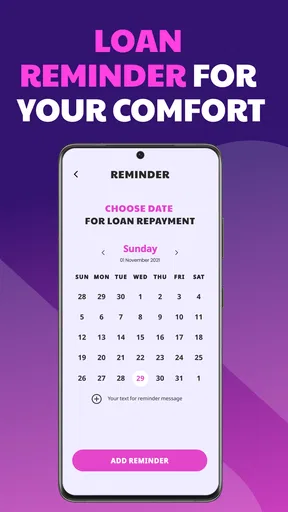
- Save the repayment date somewhere outside the app so it is not forgotten.
The third step is the one many people skip. A convenient finance app can make borrowing feel less serious than it is. I would never judge an offer only by how quickly the request can be submitted. The real question is whether the repayment fits comfortably after rent, food, transport, utilities, and existing commitments have been covered.
What happens during heavier use
For ordinary use, a cash-advance app should not need the kind of continuous attention demanded by a game, video editor, or social platform. I would expect the busiest moment to be moving through an application, checking information, and reviewing an offer rather than leaving the app open for long periods. That makes it naturally suited to short sessions on a phone.
Even so, finance tasks can feel heavy when the user has to switch between the app, messages, banking screens, and personal records. The challenge is less about graphics or processing power and more about keeping details consistent. If I am copying income information, checking a repayment date, or comparing costs, I would avoid rushing between screens. A mistake in a financial form is more consequential than a slow transition.
My advice is to prepare before opening it. Have the relevant personal and income information available, use a stable connection, and avoid starting the process while distracted. This will not change the provider’s decision, but it can reduce avoidable interruptions and make the experience feel more controlled. It also gives me a better chance of noticing an unexpected condition before agreeing to anything.
Stability matters more than visual polish here
I care less about decorative design in a finance app than I do about whether the process is understandable and recoverable. If an application closes, loses a connection, or returns to an earlier screen, I want to know which information was saved and which step must be repeated. A polished interface is useful, but clear recovery is more important when the task involves sensitive financial details.
The app’s current version is 1.2.2, which indicates that it has received updates beyond its initial release. It first appeared on July 12, 2023. I would still treat any update as a reason to recheck the flow rather than assuming that a familiar screen behaves exactly as before. Finance products can change their wording, eligibility flow, or presentation over time, and careful reading remains necessary after an update.
If the app stops responding during a request, I would avoid repeatedly submitting the same information. First I would check whether the request appears to have gone through, then look for any confirmation or status message before trying again. Duplicate submissions or repeated attempts can create confusion, especially when the user is already under pressure. Keeping a note of the last completed step is a surprisingly useful recovery habit.
Device demands and practical limitations
The minimum operating-system requirement is Android 7.0, so the app is intended to work on a broad range of Android phones rather than only recent hardware. That is helpful for people who keep an older device as their main phone. It also means the app is not automatically limited to expensive equipment, which fits the needs of someone seeking a basic financial tool.
Older phones can still introduce practical friction. Limited storage, an outdated browser component, weak connectivity, or an operating system that has not received recent security maintenance may affect the overall experience even when the app itself installs. I would keep enough free space for updates, close unrelated apps if the phone is struggling, and use a private, dependable connection when entering financial information.
I would also avoid completing a cash-advance request on a public device or an unsecured shared network. That is not a criticism unique to this app; it is simply sensible handling for any finance service. A larger screen may make terms easier to read, but a personal phone is usually the better environment because it is easier to control access and review notifications.
The financial trade-off behind the convenience
The absence of a subscription fee is a meaningful advantage for someone who does not want to pay merely to keep a finance app installed. However, no subscription fee does not mean that every advance is free. The cost of borrowing can appear through other charges or terms, so I would separate the app’s installation cost from the cost of the financial product it helps me explore.
This is where the app differs from common alternatives. A budgeting app helps me prevent a shortfall by showing spending patterns. A bank account may offer an overdraft or a small credit facility with terms I already know. A credit union may provide a more personal borrowing route, while a payment arrangement can remove the need to borrow at all. Cash Advance: Get 250 Fast is more focused on immediate access to a short-term option, so it may be more convenient in the moment but less useful for solving the reason I keep running short.
I would choose this app over a general budgeting tool only when the immediate need is the main issue and I have already considered the repayment. I would choose a budgeting app instead when the same shortage happens repeatedly. Repeated borrowing is a warning sign that the problem is structural, not just a one-off timing gap. In that situation, tracking expenses and negotiating bills can be more valuable than finding another fast application route.
Who is likely to benefit from it
This app makes the most sense for an adult who wants a focused way to explore a short-term cash advance and is comfortable reading financial terms carefully. The simple positioning may appeal to someone who dislikes subscription-based tools or does not want a large banking app filled with unrelated features. It can also suit a person who needs to start the process from a phone and wants a more direct experience than researching multiple services manually.
I would not recommend it as a first choice for someone who is already behind on several bills, has no dependable repayment date, or is considering borrowing to cover another loan. In those circumstances, speed can hide the seriousness of the situation. A nonprofit debt adviser, a bank conversation, a creditor arrangement, or support from a trusted person may be safer starting points.
The Everyone content rating describes the app’s general audience classification, not the financial wisdom of taking an advance. Parents should not interpret that label as an endorsement for children to use borrowing services. The relevant decision belongs with a financially responsible adult who understands the obligations involved and can protect personal information during the process.
Small habits that improve the experience
One useful habit is to calculate the repayment before deciding how much to request. If I need a modest amount for a specific bill, I would not automatically select the maximum available amount. Borrowing extra because it is offered can turn a manageable gap into a larger deduction from the next paycheck. The smallest workable request is usually easier to evaluate and repay.
A second habit is to read the final screen slowly, even if the earlier steps felt effortless. I would look for the total repayment, the timing, any applicable charges, and what happens if the payment is late. I would take a screenshot only if it is permitted and safe to do so, then store the important dates in my calendar. The app may make the process quick, but my record-keeping should make the obligation visible afterward.
A third is to separate technical trouble from financial uncertainty. If a screen loads slowly, that does not mean I should accept an offer simply to finish. If the terms are unclear, I would stop and seek clarification rather than treating the app’s streamlined flow as a reason to continue. The best performance improvement here is often better preparation, not a newer phone.
My view of reliability and recovery
The app’s strong average rating and broad install base make it look established enough to attract attention, but I would still evaluate my own session carefully. Ratings can tell me that many users found the general experience satisfactory; they cannot decide whether a particular advance is affordable for me. I see them as a confidence signal about usability, not as proof that the financial outcome will be positive.
For reliability, I would want every stage to be clear: what has been submitted, what remains under review, and what action is expected from me. If the app sends me away to complete a step elsewhere, I would return only after confirming what information has already been provided. This prevents the common mistake of starting over and entering inconsistent details.
Recovery also includes what happens after receiving funds. I would not uninstall the app immediately if it contains useful repayment information or status details. Instead, I would record the obligation first, confirm the repayment plan, and keep any relevant messages. Once I no longer need the service, I would review account and notification settings and remove access from the device if appropriate. A finance app should be treated as part of a financial record, not just a temporary download.
My performance verdict
Cash Advance: Get 250 Fast is appealing because it concentrates on a narrow, urgent task: helping users begin exploring a short-term cash-advance route without a subscription fee. It should be comfortable on many Android phones, including devices running Android 7.0, and its focused purpose is likely to feel less demanding than a full banking suite. For a prepared user, that can make an uncomfortable financial moment easier to organize.
My reservation is not about whether the app can be opened quickly; it is about what happens after the quick start. A fast application process cannot remove eligibility checks, repayment responsibilities, or the cost of borrowing. I would use it only after comparing alternatives and confirming that the repayment fits my real budget. If I needed long-term financial improvement, I would choose budgeting support or direct help from a creditor instead.
Overall, I see this as a practical, free finance app for carefully considered short-term needs, rather than a universal answer to money problems. The developer, KOMPANIIA LORENS PP, has created a focused entry point with a current version of 1.2.2 and a strong user response. My recommendation is conditional but positive: use it as a tool for informed comparison, not as permission to borrow impulsively. If you keep the amount small, verify every term, prepare for recovery from interruptions, and plan the repayment before submitting, the app can be useful. If those conditions are not true, a slower but cheaper alternative is probably the better choice.
Pros
- Simple application process with minimal paperwork
- Fast eligibility check and potential same-day funding
- Clear repayment schedule shown before accepting an offer
- No need to visit a physical branch
- Useful for handling unexpected short-term expenses
Cons
- Approval and loan terms depend on eligibility and state availability
- Interest and fees may make borrowing expensive
- Repayment dates can arrive quickly after receiving funds
- Late payments may lead to additional charges or collection contact
- Requires access to personal and financial information
FAQs for Cash Advance: Get 250 Fast
What is Cash Advance: Get 250 Fast, and how does it work?
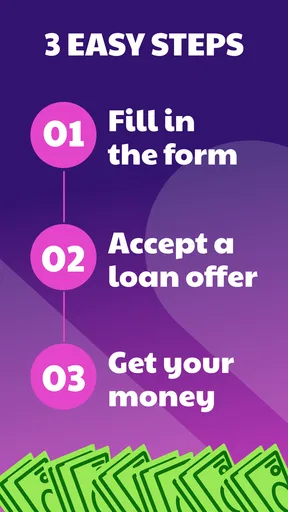
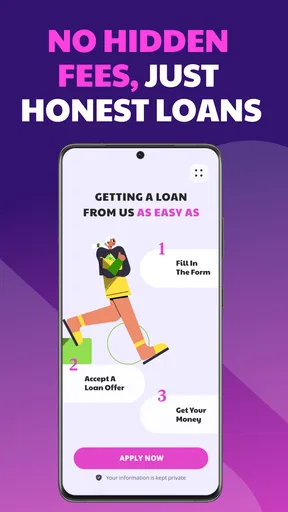
Cash Advance: Get 250 Fast is a financial app designed to help eligible users explore short-term cash advance options. After creating an account, you may be asked to provide personal, employment, banking, and income information so the service can assess available offers. The app may connect you with third-party lenders or financial providers, so approval, terms, and funding times can vary.
Can everyone get a $250 cash advance through the app?
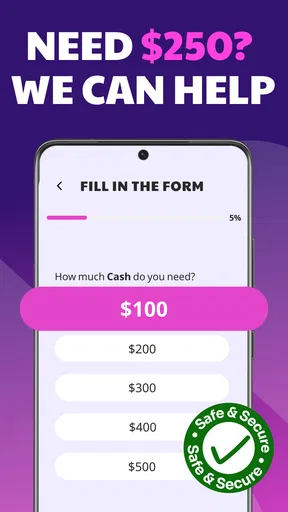
No. The advertised amount is not guaranteed for every applicant. Eligibility may depend on factors such as your income, employment status, bank account activity, identity verification, location, and the requirements of participating providers. Some users may receive a smaller amount, different offer, or no offer at all. Review the eligibility conditions carefully before submitting an application.
How quickly can the money arrive after approval?
The app promotes fast access to funds, but the actual delivery time depends on the provider, your bank, verification procedures, and the time you submit your request. Some advances may arrive quickly, while others can take one or more business days. Additional fees may apply for expedited transfers, so check the final terms before accepting an offer.
Are there fees, interest, or repayment requirements?
Potential costs depend on the offer and provider connected with your application. You should look for subscription charges, origination fees, transfer fees, optional expedited-funding costs, interest, or other finance charges. Repayment is commonly scheduled from your linked bank account on a stated date. Read the agreement carefully and confirm the total repayment amount before proceeding.
Is Cash Advance: Get 250 Fast safe to use?
Use the app cautiously and review its privacy policy, permissions, user agreement, and provider disclosures before entering sensitive information. Only download it from an official app store and confirm the developer’s identity. Never share banking passwords, verification codes, or login details outside the app. A cash advance can also affect your budget, so borrow only what you can repay on time.


